
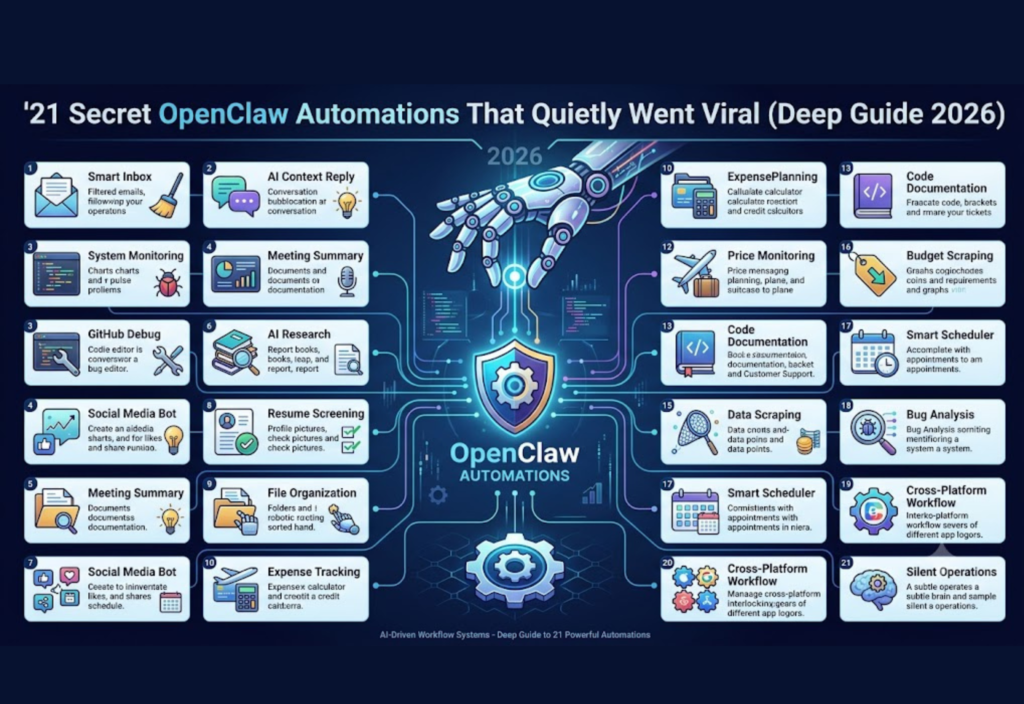
OpenClaw automations are advanced AI-driven workflow systems designed to automate repetitive digital tasks without constant human input. These automations can handle emails, coding tasks, data processing, research, scheduling, and even multi-app workflows.
In 2026, OpenClaw automations are becoming extremely popular in tech communities because they act like “digital workers” that run in the background and complete tasks automatically. Instead of manually doing repetitive work, users can set up intelligent automation flows that save time and increase productivity.
This article explores 21 secret OpenClaw automations that quietly went viral and are now widely used in productivity systems.
21 Secret OpenClaw Automations That Went Viral
1. Smart Inbox Automation System
OpenClaw automations automatically clean your inbox by filtering spam, sorting emails, and highlighting important messages based on priority and sender behavior.
2. AI Context Reply Generator
This automation understands email or chat context and generates natural replies based on tone, urgency, and conversation history.
3. GitHub Code Debug Automation
Developers use it to detect bugs, analyze logs, and suggest fixes automatically. It can even generate pull requests with improvements.
4. 24/7 System Monitoring Bot
It continuously monitors servers, APIs, and applications, detecting downtime or performance issues instantly.
5. Meeting Summary Automation
After meetings, OpenClaw converts transcripts into structured summaries, action points, and task lists.
6. AI Research Assistant
This automation collects data from multiple sources, filters irrelevant content, and creates structured research reports.
7. Social Media Optimization Bot
It analyzes engagement patterns and schedules posts at optimal times for maximum reach.
8. Resume Screening Automation
HR teams use this to analyze resumes, extract skills, and rank candidates automatically.
9. File Organization System
Automatically sorts files into folders, renames documents, and removes duplicates.
10. Expense Tracking Automation
Tracks spending, categorizes transactions, and generates financial reports automatically.
11. Travel Planning Assistant
Creates complete travel plans including flights, hotels, and itineraries.
12. Price Monitoring Bot
Tracks online product prices and alerts users when discounts are available.
13. Code Documentation Generator
Automatically converts raw code into readable documentation.
14. Customer Support Automation
Reads incoming tickets and assigns them to the correct department instantly.
15. Data Scraping & Reporting Tool
Collects data from websites and converts it into structured reports or dashboards.
16. Budget Optimization Assistant
Helps users understand spending patterns and suggests saving strategies.
17. Smart Calendar Scheduler
Automatically manages meetings based on priority and availability.
18. Bug Analysis Automation System
Analyzes bug reports and identifies likely root causes with suggested fixes.
19. Learning Automation Assistant
Summarizes study materials, generates notes, and creates flashcards.
20. Cross-Platform Workflow Automation
Connects tools like Slack, Notion, Email, and GitHub to automate workflows.
21. Silent Operations AI Agent
Runs in background, detects system issues, and suggests fixes without user input
Why OpenClaw Automations Went Viral
These automations became popular because they:
- Reduce manual workload
- Save time and effort
- Work silently in background
- Connect multiple apps together
- Act like digital employees
Instead of doing tasks manually, users can design workflows that execute automatically.
Benefits of OpenClaw Automations
OpenClaw automations offer several advantages for individuals, teams, and businesses looking to streamline repetitive tasks and improve overall productivity. By automating routine workflows, users can focus more on strategic work instead of manual processes.
High Productivity
One of the biggest benefits of OpenClaw automations is increased productivity. Tasks that normally take hours to complete manually can often be finished within minutes through automated workflows. This allows users to accomplish more work in less time.
Reduced Human Errors
Manual processes are prone to mistakes, especially when repetitive tasks are involved. OpenClaw automations execute predefined workflows consistently, helping reduce human errors and improving the accuracy of business operations.
Better Scalability
As businesses grow, handling larger volumes of data and tasks manually becomes difficult. OpenClaw automations can process multiple workflows simultaneously, making it easier to scale operations without significantly increasing workload.
Cost Efficiency
Automation helps reduce operational costs by minimizing repetitive manual work. Businesses can optimize resources, improve efficiency, and lower expenses while maintaining consistent performance.
Faster Decision-Making
By automating data collection, processing, and reporting, OpenClaw enables teams to access information more quickly. This helps organizations make faster and more informed decisions.
Improved Workflow Consistency
Automated workflows follow the same predefined rules every time they run. This consistency ensures standardized processes and reliable results across different projects and departments.
Limitations of OpenClaw Automations
Although OpenClaw automations provide many benefits, they also have certain limitations that users should consider before implementing complex workflows.
Initial Setup Requires Time
Creating efficient automation workflows requires careful planning and configuration. Setting up triggers, actions, and integrations may take time, especially for advanced automation projects.
Incorrect Workflow Logic
If automation rules are designed incorrectly, workflows may produce unexpected results or execute unwanted actions. Testing workflows thoroughly before deployment is essential.
Security and Privacy Concerns
Automation often connects multiple applications and services. If permissions or API credentials are not configured securely, sensitive information could be exposed. Proper security practices are necessary to protect data.
Dependence on Third-Party Services
Many OpenClaw workflows rely on external APIs and cloud-based platforms. If one of these services experiences downtime or changes its API, certain automations may stop working until they are updated.
Regular Maintenance
Business processes evolve over time, and automation workflows must be reviewed regularly to ensure they continue working correctly. Periodic updates and monitoring help maintain reliable performance.
Best Practices for Using OpenClaw Automations
To achieve the best results with OpenClaw automations, consider following these best practices:
- Start with simple workflows before building advanced automations.
- Test every workflow thoroughly before using it in production.
- Monitor automation logs regularly to identify potential issues.
- Keep API keys and credentials secure.
- Update integrations whenever connected platforms release major changes.
- Document workflows for easier maintenance and collaboration.
Following these recommendations can improve reliability and reduce the risk of automation failures.
Conclusion
OpenClaw automations are transforming the way individuals and businesses manage digital workflows. Instead of performing repetitive tasks manually, users can build intelligent automation systems that connect applications, process data, and complete complex workflows with minimal human intervention.
As artificial intelligence continues to advance, OpenClaw automations are expected to become an essential part of modern workplaces. Their ability to improve productivity, reduce errors, save time, and support scalable business operations makes them a valuable solution for professionals, developers, and organizations looking to work more efficiently in 2026 and beyond.